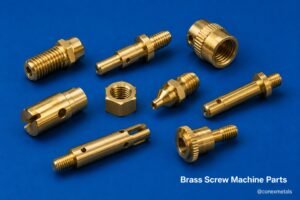
When it comes to precision manufacturing, brass screw machining stands out as one of the most reliable and widely used processes in the metalworking industry. From automotive components to electrical fittings, plumbing hardware to industrial machinery, brass screw machine parts are indispensable across virtually every manufacturing sector. In this comprehensive guide, we explore everything you need to know about brass screw machining — from the fundamentals of the process to the diverse range of components it produces, the advantages of brass as a material, industry applications, quality standards, and how to choose the right supplier.
What Is Brass Screw Machining?
Brass screw machining is a high-speed, automated metal-cutting process used to manufacture small, precise, and complex metal components from brass bar stock. The process gets its name from early “screw machines” — a category of automatic lathes originally designed to produce screws and threaded fasteners at high volume. Today, the term encompasses a much broader range of components produced on both single-spindle and multi-spindle automatic screw machines, as well as modern CNC turning centers.
In brass screw machining, brass rod or bar stock is fed automatically into the machine, where a series of cutting tools simultaneously perform multiple operations — including turning, drilling, threading, knurling, cross-drilling, and grooving — to produce finished or semi-finished parts. The automation and speed of these machines make them ideal for high-volume production runs, ensuring consistent quality and dimensional accuracy across thousands or even millions of parts.
Why Brass Is the Preferred Material for Screw Machining
Among all metals used in screw machining, brass remains the most popular choice — and for good reason. Brass, an alloy primarily composed of copper and zinc, offers an exceptional combination of properties that make it uniquely suited to precision machining applications.
1. Excellent Machinability
Brass is widely regarded as one of the most machinable metals available. It cuts cleanly, produces short chips that don’t clog tooling, and allows for high cutting speeds — significantly reducing cycle times and tooling wear. Free-cutting brass (such as C360 brass) is assigned a machinability rating of 100, meaning it serves as the benchmark against which all other metals are measured. This makes brass screw machining extremely efficient and cost-effective.
2. Superior Corrosion Resistance
Brass naturally resists corrosion from moisture, salt water, and many chemicals. This makes brass screw machine parts ideal for use in plumbing, marine, and outdoor applications where exposure to the elements is unavoidable. Unlike steel components, brass parts do not rust, which extends their service life and reduces maintenance requirements.
3. High Electrical and Thermal Conductivity
Brass offers excellent electrical conductivity — approximately 28% that of pure copper — making brass screw machined parts the go-to choice for electrical connectors, terminals, switchgear components, and other electronic hardware. Its thermal conductivity also makes it suitable for heat exchangers and precision instrument components.
4. Aesthetic Appeal and Surface Finish
Brass has a naturally attractive golden appearance that makes it desirable for decorative hardware, architectural fittings, and consumer products. It accepts a wide range of surface finishes including bright polishing, nickel plating, chrome plating, tin plating, and lacquering — enhancing both aesthetics and functional durability.
5. Dimensional Stability and Strength
Despite its softness relative to steel, brass provides sufficient tensile strength and dimensional stability for most industrial applications. It holds tight tolerances well under machining, making it reliable for precision-critical components. Its non-sparking properties also make it safe for use in explosive or hazardous environments.
6. Recyclability and Sustainability
Brass is 100% recyclable without loss of properties, making it an environmentally responsible choice for manufacturers looking to reduce their carbon footprint and material waste. Brass machining scrap is highly valued and can be remelted and reused efficiently.
Types of Brass Used in Screw Machining
Not all brass alloys are created equal. Different grades offer varying balances of machinability, strength, corrosion resistance, and cost. The most commonly used brass grades in screw machining include:
- C360 Free-Cutting Brass (Alloy 360): The most popular choice for screw machining, C360 contains approximately 61.5% copper, 35.5% zinc, and 3% lead. The lead content acts as an internal lubricant during cutting, enabling ultra-high machining speeds and excellent surface finishes. It is the gold standard for high-volume brass screw machine parts.
- C385 Architectural Bronze: Used for architectural hardware and decorative applications, C385 offers good machinability with enhanced aesthetic qualities.
- C464 Naval Brass: With added tin content for superior corrosion resistance in marine environments, naval brass is used where saltwater exposure is a concern.
- C230 Red Brass: Higher copper content (85%) gives red brass superior corrosion resistance and electrical conductivity, commonly used in plumbing fittings and valves.
- C260 Cartridge Brass: Known for excellent cold-working properties, cartridge brass is used in specialized applications requiring formability alongside good machinability.
- C353 Leaded Brass: An alternative to C360 for applications requiring slightly different mechanical properties while maintaining excellent machinability.
The Brass Screw Machining Process: Step by Step
Understanding how brass screw machine parts are manufactured helps buyers and engineers appreciate the precision and capability that goes into each component. Here is a detailed overview of the process:
Step 1: Design and Engineering
The process begins with detailed engineering drawings or CAD models that specify every dimension, tolerance, surface finish requirement, and material specification. Modern manufacturers work closely with customers to optimize designs for manufacturability, reducing cost without compromising functionality.
Step 2: Material Selection and Bar Stock Preparation
The appropriate brass alloy is selected based on application requirements. Brass bar stock is sourced in the required diameter and cut to length for feeding into the screw machine. Bar stock quality is verified for composition, straightness, and surface condition to ensure consistent machining results.
Step 3: Machine Setup and Tooling
The screw machine is set up with the appropriate tooling — including turning tools, drills, taps, form tools, and cutoff tools — positioned precisely for each operation. On CNC screw machines, the program is loaded and verified. Setup time is a one-time investment that pays dividends across large production runs.
Step 4: Automatic Machining Operations
The brass bar stock feeds automatically through the machine spindle. As it advances, multiple tools engage simultaneously, performing operations such as:
- OD Turning: Reducing the outside diameter to the required dimension
- Face Turning: Creating flat end faces
- Drilling: Producing through-holes or blind holes
- Boring: Enlarging or finishing internal diameters
- Threading (Internal and External): Cutting threads for fasteners and fittings
- Knurling: Creating textured grip patterns on the surface
- Cross Drilling: Producing holes at angles to the main axis
- Grooving and Necking: Creating circumferential grooves for O-rings or retaining rings
- Chamfering and Deburring: Creating angled edges for assembly ease
- Cutoff: Separating the finished part from the bar stock
Step 5: Secondary Operations
Many brass screw machine parts require additional processing after primary machining. Secondary operations may include milling, slotting, cross-drilling on a separate axis, heat treatment, surface finishing (polishing, plating, anodizing), and assembly operations such as pressing inserts or adding seals.
Step 6: Quality Inspection and Control
Finished parts undergo rigorous dimensional inspection using precision gauging, CMM (Coordinate Measuring Machine) inspection, optical comparators, and other metrology tools. Critical dimensions, thread gauging, and surface finish are verified against drawing requirements. Statistical Process Control (SPC) is often employed for high-volume runs to monitor process capability and detect drift.
Step 7: Cleaning, Packaging, and Delivery
Parts are cleaned to remove machining oils, deburring media, or plating compounds. They are then inspected, counted, and packaged — often in bulk bags, trays, or custom packaging depending on customer requirements — before being shipped.
Types of Brass Screw Machine Parts
The versatility of brass screw machining means it can produce an enormous range of components. Here is an overview of the most common brass screw machine parts manufactured across industries:
Brass Fasteners and Screws
The original application of screw machines remains highly relevant today. Brass machine screws, set screws, hex bolts, socket head cap screws, thumb screws, and specialty fasteners are produced in vast quantities for electronics, furniture, plumbing, and industrial assembly applications. Brass fasteners are preferred over steel in applications where corrosion resistance, non-magnetism, or electrical conductivity is required.
Brass Nuts and Threaded Inserts
Hex nuts, square nuts, coupling nuts, knurled thumb nuts, and threaded inserts for plastic molded parts are all classic brass screw machine products. Brass threaded inserts are extensively used in injection-molded plastic assemblies for electronics, appliances, and automotive interiors, providing durable threaded connections in softer plastic materials.
Brass Fittings and Connectors
Compression fittings, push-to-connect fittings, barbed hose fittings, flare fittings, and pipe nipples represent one of the largest categories of brass screw machine parts. These components form the backbone of plumbing, HVAC, gas distribution, and hydraulic systems worldwide. Their corrosion resistance and leak-free sealing make them the preferred choice for fluid control applications.
Brass Valve Components
Valve bodies, stems, seats, discs, bonnets, and gland nuts are machined from brass for ball valves, gate valves, check valves, and pressure relief valves used in water, gas, and industrial fluid systems. The precision required for leak-tight sealing makes screw machining the ideal production method for these critical components.
Brass Electrical and Electronic Components
Electrical terminals, connectors, sockets, pins, contacts, standoffs, spacers, and cable glands represent a major segment of brass screw machine parts production. The electrical conductivity of brass, combined with its ease of machining and plating, makes it the material of choice for these applications. Brass components are found in switchgear, control panels, PCB assemblies, power distribution equipment, and consumer electronics.
Brass Automotive Parts
The automotive industry relies heavily on brass screw machine parts for fuel system components, brake fittings, cooling system fittings, sensor housings, connector pins, and decorative trim components. The reliability, corrosion resistance, and dimensional accuracy of brass machined parts make them critical to vehicle performance and safety.
Brass Hydraulic and Pneumatic Fittings
High-pressure hydraulic systems and pneumatic circuits require fittings and connectors that can withstand elevated pressures without leaking. Brass screw machine parts such as compression fittings, elbow connectors, tee connectors, bulkhead fittings, and manifold blocks are manufactured to precise dimensional standards for reliable, leak-free performance in demanding applications.
Brass Instrumentation Parts
Precision instrument housings, bushings, standoffs, adjustment screws, and gauge fittings are produced using brass screw machining for use in pressure gauges, flow meters, temperature sensors, and analytical instruments. The dimensional accuracy and stability of brass make it ideal for these precision measurement applications.
Brass Plumbing Components
Threaded adapters, couplings, elbows, tee fittings, ball valves, stop cocks, check valves, compression rings, and union nuts are among the most common brass screw machine parts in the plumbing industry. Their corrosion resistance, lead-free brass options for drinking water compliance, and ease of assembly make them the dominant material in residential and commercial plumbing systems.
Brass Hardware and Architectural Components
Hinges, knobs, handles, escutcheons, cabinet hardware, lighting components, and decorative architectural fittings are produced through brass screw machining for the construction, furniture, and interior design industries. The natural beauty of polished or satin-finished brass makes these components as desirable aesthetically as they are functional.
Key Advantages of Brass Screw Machining Over Other Processes
High-Volume Production Efficiency
Multi-spindle automatic screw machines can produce multiple parts simultaneously — some capable of 6 or 8 parts per cycle — achieving production rates of hundreds to thousands of parts per hour. This makes brass screw machining the most cost-effective method for high-volume precision components, with per-part costs that are a fraction of conventional CNC machining for equivalent parts.
Exceptional Dimensional Consistency
The automated, cam-driven or CNC-controlled nature of screw machines ensures that every part produced in a run is virtually identical. Tolerances as tight as ±0.001 inches (±0.025 mm) or better are routinely achieved, providing the dimensional consistency that modern assembly processes demand.
Complex Geometry in a Single Setup
Unlike conventional machining where complex parts may require multiple setups, screw machines perform multiple operations simultaneously and sequentially in a single continuous process. This eliminates re-fixturing errors, reduces cycle time, and improves overall accuracy.
Material Efficiency
Automated feeding systems minimize material waste, and the short chips produced by brass machining are easy to collect, separate, and recycle — contributing to both cost efficiency and environmental sustainability.
Scalability
Brass screw machining scales effortlessly from prototype quantities to millions of parts per year. While the initial tooling investment is higher than for some processes, the amortized cost per part drops dramatically at volume, making it ideal for products with stable, predictable demand.
Quality Standards for Brass Screw Machine Parts
When sourcing brass screw machine parts, quality assurance is paramount. Reputable manufacturers adhere to internationally recognized quality management systems and industry-specific standards to ensure consistent product quality. Key standards include:
- ISO 9001:2015: The international benchmark for quality management systems, ensuring consistent processes, traceability, and continual improvement throughout manufacturing operations.
- RoHS Compliance: Restriction of Hazardous Substances compliance ensures that brass components used in electronics do not contain restricted substances above threshold levels.
- REACH Compliance: European chemical regulation compliance for substances of very high concern in manufactured articles.
- NSF/ANSI 61 and NSF/ANSI 372: Standards for brass fittings and components used in potable water systems, ensuring lead content meets regulatory requirements for drinking water safety.
- ASTM Standards: American Society for Testing and Materials standards governing brass alloy compositions (e.g., ASTM B16 for C360 free-cutting brass).
- DIN Standards: Deutsche Institut für Normung standards for metric brass fasteners and components commonly required in European markets.
Choosing the Right Brass Screw Machine Parts Supplier
Selecting the right manufacturing partner for your brass screw machine parts is a critical business decision that affects product quality, delivery reliability, and total cost of ownership. Here are the key factors to evaluate:
Manufacturing Capability and Capacity
Assess the supplier’s machine park — the number and types of screw machines, CNC turning centers, and secondary operation equipment available. Ensure they have the capacity to meet your volume requirements with appropriate redundancy to handle peak demand or machine downtime without affecting your supply.
Quality Management System
ISO 9001 certification is a minimum requirement for serious supply chain partnerships. Look for suppliers with robust in-process inspection systems, calibrated measurement equipment, and documented quality records. Ask about their defect rates, corrective action processes, and inspection capabilities.
Engineering Support
A supplier with strong engineering capabilities can add significant value through design for manufacturability (DFM) reviews, suggesting design changes that reduce cost without compromising function. This collaborative approach can save substantial costs over the life of a product program.
Material Traceability
For regulated applications (potable water, aerospace, medical), full material traceability — from mill certifications through to finished part — is essential. Confirm that the supplier maintains documented material traceability records.
Lead Times and Supply Chain Reliability
Evaluate the supplier’s standard lead times, their stock-holding capabilities, and their track record for on-time delivery. Suppliers with integrated supply chains — sourcing brass bar stock from certified mills, processing in-house, and managing their own logistics — generally offer better reliability than those relying on multiple subcontractors.
Export Experience and Compliance
For international sourcing, ensure the supplier has experience with export documentation, customs compliance, and international shipping logistics. Familiarity with the regulatory requirements of your target markets is essential.
Applications of Brass Screw Machine Parts Across Industries
The reach of brass screw machine parts extends across virtually every manufacturing industry. Here is a sector-by-sector overview of key applications:
- Plumbing and Sanitary: Fittings, valves, taps, compression rings, pipe connectors, stop cocks, and manifold components for residential and commercial water systems.
- Electrical and Electronics: Terminals, connectors, cable glands, standoffs, PCB hardware, switch components, and earthing connectors for power distribution and electronics.
- Automotive: Fuel fittings, brake connectors, cooling system parts, sensor housings, and hydraulic components for passenger and commercial vehicles.
- HVAC and Refrigeration: Flare fittings, compression fittings, valve components, and refrigerant line connectors for heating, ventilation, air conditioning, and refrigeration systems.
- Telecommunications: Coaxial connectors, RF fittings, grounding hardware, and cable management components for telecom infrastructure.
- Medical and Pharmaceutical: Instrument components, gas fittings, precision valve parts, and analytical instrument hardware where biocompatibility and precision are critical.
- Aerospace and Defense: Precision fasteners, hydraulic fittings, instrument components, and connector hardware for aircraft and defense systems.
- Oil and Gas: Instrumentation fittings, valve components, and flow control hardware for upstream and downstream petroleum applications.
- Consumer Products: Hardware for furniture, appliances, bathroom accessories, lighting fixtures, and decorative items.
- Marine: Seawater-resistant fittings, hardware, and connectors for boat building and marine equipment.
Brass Screw Machining vs. Other Manufacturing Processes
Understanding how brass screw machining compares to alternative manufacturing processes helps engineers make informed material and process selection decisions.
Compared to investment casting, brass screw machining offers significantly tighter dimensional tolerances, better surface finish directly from the machine, and more economical unit costs at medium-to-high volumes. Casting is preferred for complex external geometries that would be difficult to machine, but for components with predominantly rotational features, machining wins on quality and cost.
Compared to cold heading / cold forming, screw machining offers superior dimensional complexity — you can produce internal features, cross-holes, and fine threads that are difficult or impossible to form. Cold heading excels for ultra-high volumes of simple fasteners where material utilization is critical.
Compared to conventional CNC turning, automatic screw machining offers dramatically higher throughput for small, high-volume parts. CNC turning centers are more flexible and cost-effective for lower volumes, complex one-off or prototype parts, and large-diameter work, while screw machines dominate for high-volume small parts.
Compared to die casting, brass screw machining produces components with superior mechanical properties (no porosity, higher density) and much tighter tolerances. Die casting is preferred for complex shapes with thin walls that cannot be machined efficiently.
Surface Finishing Options for Brass Screw Machine Parts
Surface finishing enhances the appearance, corrosion resistance, and functionality of brass screw machine parts. Common finishing options include:
- Bright Nickel Plating: Provides a bright, hard surface with good corrosion resistance. Widely used for electrical connectors and decorative hardware.
- Tin Plating: Excellent solderability makes tin-plated brass components ideal for electrical terminals and PCB hardware.
- Chrome Plating: Produces a highly reflective, hard surface for decorative automotive and architectural hardware.
- Zinc Plating: Cost-effective corrosion protection for general-purpose hardware.
- Electroless Nickel Plating: Uniform coating thickness on complex geometries with good hardness and corrosion resistance.
- Silver Plating: Maximum electrical conductivity for high-performance electrical contacts and RF connectors.
- Passivation: Chemical treatment to remove surface contamination and enhance natural oxide layer.
- Lacquering: Clear or colored lacquer coatings to protect the natural brass finish from tarnishing on decorative components.
- Tumble Polishing: Mass finishing process to remove burrs, improve surface finish, and enhance appearance across large batches of parts.
Environmental and Sustainability Considerations
Sustainability is an increasingly important consideration in materials selection and manufacturing. Brass screw machining scores well on several environmental metrics. Brass is one of the most recycled metals in the world, with a very high recycling rate globally. Machining chips and scrap are easily separated from coolants, collected, and sold back to brass mills for remelting. This closed-loop material cycle significantly reduces the environmental impact of brass component manufacturing.
Lead-free brass alloys (such as C69300 and bismuth-containing brasses) have been developed to meet regulatory requirements for drinking water applications without sacrificing machinability. Manufacturers who have transitioned to lead-free alloys for potable water applications demonstrate their commitment to both regulatory compliance and consumer health.
The longevity and corrosion resistance of brass components also contributes to sustainability — parts that last longer in service require less frequent replacement, reducing the overall lifecycle environmental impact of products that incorporate them.
Frequently Asked Questions About Brass Screw Machine Parts
What tolerances can be achieved in brass screw machining?
Modern CNC screw machines routinely achieve tolerances of ±0.001 inches (±0.025 mm) for diameters, and ±0.002 inches (±0.05 mm) for lengths. Tighter tolerances are achievable with specialized tooling and process control. Thread tolerances conform to standard thread class specifications (e.g., 2A/2B or 3A/3B per ANSI standards).
What is the minimum and maximum size for brass screw machine parts?
Brass screw machining is most economical for parts ranging from approximately 1/16 inch (1.5 mm) to 2 inches (50 mm) in diameter. Very small parts below 1/16 inch may require specialized micro-machining equipment. Parts larger than 2 inches can be machined on large-capacity CNC turning centers but are typically produced in lower volumes where bar-feed screw machining is less economical.
How long does it take to set up a brass screw machine for a new part?
Setup times vary by machine type and part complexity. Simple parts on CNC screw machines may require 2-4 hours to program and set up. Complex multi-spindle setups can take 8-24 hours. This setup cost is amortized over the production run, so longer runs yield lower per-part costs.
What are the typical lead times for brass screw machine parts?
Lead times depend on order quantity, part complexity, and current production loading. Typical lead times range from 2-4 weeks for standard parts to 6-8 weeks for complex or large orders. Suppliers with established tooling for standard parts may offer faster turnaround from stock or semi-finished inventory.
Can brass screw machine parts be supplied in custom alloys?
Yes. While C360 free-cutting brass is the most common alloy, experienced manufacturers can work with a wide range of brass grades — as well as other copper alloys, aluminum, stainless steel, and other materials — to meet specific application requirements.
Why Choose Conex Metals for Brass Screw Machine Parts?
At Conex Metals, we bring decades of expertise in the design and manufacture of high-quality brass screw machine parts for customers across the globe. As a leading manufacturer and exporter based in India, we combine advanced manufacturing capabilities with rigorous quality control to deliver components that meet the most demanding specifications.
Our comprehensive range of brass screw machine parts includes fittings, fasteners, valve components, electrical parts, automotive components, plumbing hardware, and custom precision parts across virtually every industry sector. We work with all standard brass alloys, including C360 free-cutting brass, naval brass, red brass, and lead-free brass grades for potable water applications.
Our manufacturing facility operates under an ISO 9001:2015 certified quality management system, with in-process and final inspection using calibrated precision measurement equipment. We provide full material traceability, certificates of conformance, and dimensional inspection reports with every shipment.
Whether you need a prototype batch of 100 pieces or a production run of 1,000,000+ parts, Conex Metals has the capacity, capability, and commitment to deliver on time, to specification, and within budget. Our experienced engineering team is available to support your design process, suggest cost-saving modifications, and help you select the optimal material and process for your application.
Conclusion
Brass screw machining and brass screw machine parts represent the pinnacle of high-volume precision manufacturing. The unique combination of brass’s exceptional machinability, corrosion resistance, electrical conductivity, and aesthetic appeal — combined with the efficiency and accuracy of modern automatic screw machines — makes this process the foundation of reliable component supply for industries from plumbing to aerospace, from electronics to automotive.
Whether you are an engineer specifying components for a new product, a purchasing manager seeking a reliable supplier, or a business owner looking to optimize your supply chain, understanding the capabilities and advantages of brass screw machining empowers you to make better decisions and source smarter.
Ready to Source Premium Brass Screw Machine Parts?
Contact Conex Metals today and discover why manufacturers around the world trust us as their preferred supplier of high-quality brass screw machine parts. Our team of experts is ready to review your drawings, provide competitive quotes, and deliver precision components that exceed your expectations.
📞 Call us: +91-22-43449300 / +91-22-43449323
📧 Email us: sales@conexmetals.com
🌐 Visit us: www.conexmetals.com
Request a Quote Today — and experience the Conex Metals difference: precision engineering, uncompromising quality, and world-class customer service, all from one trusted partner.